Is this the clip you saw?
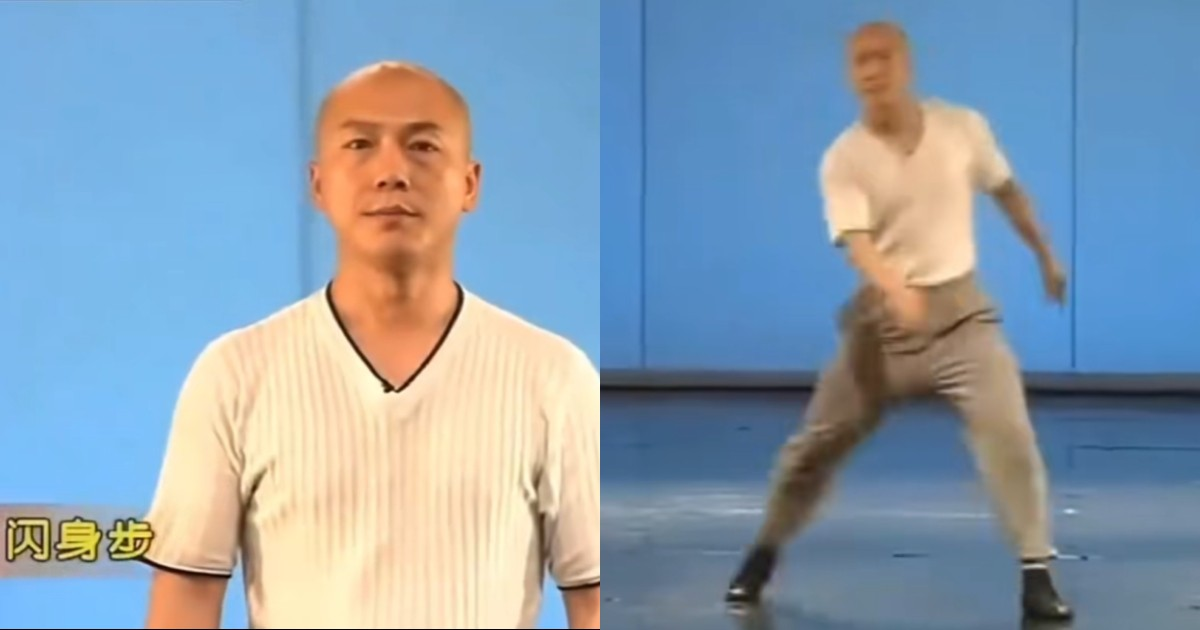
Shan Shen Bu (闪身步) is a dance step from Anhui Huagudeng, also known as Flower Drum Lantern dance. A teaching demonstration became material for videos that turn a sideways dodge into an elaborate way of avoiding someone. [1] [2]
Watch Shan Shen Bu in context
Start with the teaching-footage compilation, then compare a comedy example linked by Know Your Meme. These are platform embeds, with their creators credited below.
Loads a YouTube privacy-enhanced player. YouTube receives connection data when loaded. Privacy details.
Source: 芒key / YouTube · Reupload, not the first release of the teaching material. Playback checked on YouTube on 23 October 2026.
Loads a TikTok player. Availability depends on the platform and your location. Privacy details.
Creator: @._su05 / TikTok · Source record. Direct playback has not been confirmed in this review.
Players connect only when you choose to load them. Nothing autoplays. If a player is unavailable, use its source link.
A teacher announces a movement, then demonstrates it. In remixes, someone follows those instructions while slipping out of another person's way. The Chinese name may appear as shan shen bu, shanshenbu, or flash step.
The name identifies one step. A longer montage may include several different movements, so the whole sequence is not necessarily one dance routine.
What do the Chinese words mean?
In 闪身步, shǎn suggests dodging, shēn means body, and bù means step. “Dodging step” conveys the action more naturally than translating each character separately.
闪身步 shǎn shēn bù
The dodging step. This is the name behind “Shan Shen Bu.” In a comedy clip, the movement can become a visual “let me get out of this conversation.”
浪子踢球 làng zǐ tī qiú
The wanderer's ball kick. Tī qiú means kicking a ball. English reports also use “prodigal kicking the ball.” This names a different Huagudeng movement. [3]
狗熊哆嗦毛 gǒu xióng duō suo máo
A bear shaking its fur. It often appears in the same meme compilations, but belongs to Shandong Guzi Yangge. Sharing a montage does not make it another name for Shan Shen Bu. [3]
No matching name in these three cards. Try a shorter word, or clear the search.
3 names · Editorial translations, not a full audio transcriptWhy is a dance lesson funny here?
The remix gives a precise, serious demonstration an absurd everyday purpose. Instead of taking one ordinary step away, the character appears to need a whole lesson in avoiding people. That contrast is our reading of the format, rather than a claim about what every viewer finds funny.
Written for this explanation; not a quotation from an actual post.
For a documented example of the format, follow the KYM entry and its linked skits. A parody of dodging is not evidence of a self-defence technique.
Which date belongs to which event?
The age of a lesson, the date someone uploaded it, and the date a remix appeared are different questions.
The teaching material. In a 2026 interview, demonstrator Zhao Tiechun says the DVD teaching project was recorded in 2001. This is his first-person account. [1]
The meme's circulation. KYM documents teaching-video reuploads and comedy remixes. Those records help trace circulation; they do not identify the first person ever to upload or remix the lesson. [2]
We have not established the earliest online upload. If a page gives a recording year without naming a source, check whether it has confused filming with uploading.
Three things easy to mix up
Is this kung fu?
The movement discussed here comes from a folk-dance teaching context. Comedy clips can give it the appearance of a martial-arts demonstration. That framing does not change its documented dance origin. [1]
Are Shan Shen Bu and Shanshenbu different?
They are spaced and unspaced ways of writing the same Chinese name in roman letters. The tone-marked form used here is shǎn shēn bù.
Where can I watch the teaching clip?
This YouTube upload is identified by KYM as a reupload, not the original release. Its playback was checked on YouTube on 23 October 2026. You can also load the player in the video section; embedding may vary by region or uploader settings. [2]
Follow the evidence
- China Art News: interview with Zhao TiechunFirst-person interview
16 October 2026. Supports the teaching context, Huagudeng connection and Zhao's account of the 2001 recording. Read through indexed text; direct access may vary.
- Know Your Meme: Shan Shen Bu / ShanshenbuSecondary record
Documents examples of circulation and links to reuploads and skits. We do not treat its examples as proof of an absolute first upload.
- Cover News: interview with Huagudeng performer Zhang XiaochunReported interview
24 September 2026, republished on Sina. Supports distinguishing Huagudeng steps from the Guzi Yangge movement seen alongside them.
Editorial note: this sample explains names and context. It does not offer a technical dance lesson or a complete transcription of a particular edit. The image pairs teaching-video stills for recognition. Reference videos remain hosted by their original platforms, with credit and source links.